
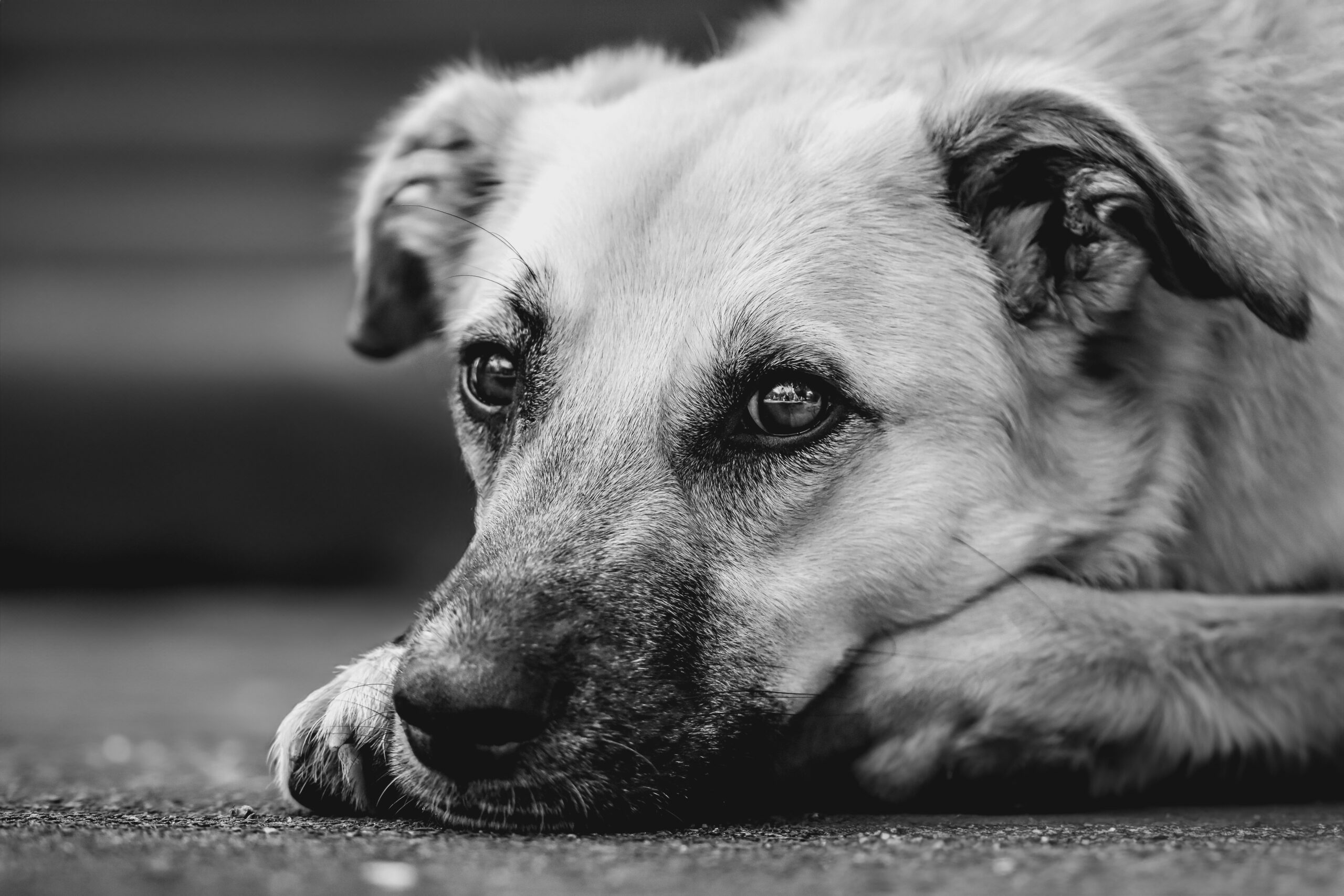
Dogs do not always show stress in obvious ways.
Some bark. Some shake. Some hide under the bed. Others chew, pace, lick, dig, whine, follow their owner from room to room, or seem unable to settle even when nothing obvious is happening.
For many owners, this leads to the same search: what actually helps calm a dog down?
That is where terms like L-theanine for dogs and dog calming items come in. Owners are not always looking for one magic solution. More often, they are trying to build a simple calming routine that helps their dog feel safer during everyday stress.
The important thing to understand is this:
Most anxious dogs need more than one calming item.
A supplement may help support relaxation. A quiet space may help reduce stimulation. A chew, lick mat or puzzle toy may give the dog something predictable to focus on. Training and routine help the dog understand what to expect.
Used together, these tools can become part of a calmer home environment.
What Is L-Theanine for Dogs?
L-theanine is an amino acid naturally found in tea leaves.
In pet supplements, L-theanine is commonly used as a calming-support ingredient. It is not a sedative, and it should not be treated like a medication. Instead, it is usually included in formulas designed to support relaxation, emotional balance and everyday calm behaviour.
For a deeper look at how this ingredient is used in calming routines, read our guide: L-Theanine for Dogs: Helping Calm Dog Anxiety.
Many owners look for L-theanine for dogs when their dog is dealing with mild stress, restlessness, travel nerves, loud noises, grooming visits, new environments or changes in routine.
However, anxiety can have many causes. Pain, illness, poor sleep, lack of exercise, fear learning, separation distress and environmental stress can all change a dog’s behaviour. Veterinary behaviour guidance notes that behaviour concerns may have medical, environmental or learned components, so persistent changes should not be dismissed as simple disobedience. [1]
That is why calming supplements work best as part of a bigger plan, not as the only answer.
When Dog Calming Items Can Help

A calm dog outdoors, showing how dog calming items may help support anxious dogs
Dog calming items are most useful when a dog is mildly stressed, overstimulated or struggling to settle.
Common situations include:
- Visitors coming to the house
- Fireworks or storms
- Car travel
- Grooming appointments
- Vet visits
- Moving home
- Being left alone for short periods
- Changes in household routine
- New pets or new family members
Some dogs only need support during specific events. Others do better with a daily routine that keeps their nervous system more settled over time.
If your dog’s anxiety is severe, sudden, worsening or causing injury, it is best to speak with your vet or a qualified behaviour professional.
1. A Quiet Safe Space
One of the simplest dog calming items is not something you buy.
It is a safe space.
This might be a crate, bed, laundry area, quiet room or corner of the house where your dog can rest without being disturbed.
The space should feel predictable. Keep it away from heavy foot traffic, loud appliances and children’s play areas. Add familiar bedding, water and a chew or lick mat if your dog enjoys them.
The goal is not to isolate the dog.
The goal is to give them somewhere they can choose to decompress.
2. Lick Mats and Long-Lasting Chews
Licking and chewing can help some dogs settle because they give the dog a repetitive activity to focus on.
A lick mat with dog-safe soft food, a slow feeder or a suitable chew can be useful before visitors arrive, during grooming practice, after a walk or when the household becomes busy.
These items are not a cure for anxiety, but they can help redirect mild stress into a calmer activity.
Always choose chews that match your dog’s size, chewing style and dental health.
3. Puzzle Toys and Snuffle Mats
Some dogs become anxious because they are under-stimulated.
Working breeds, young dogs and intelligent dogs often need more than physical exercise. They need mental work.
Puzzle toys, treat balls and snuffle mats encourage sniffing, searching and problem solving. These activities can help a dog use their brain in a calm, structured way.
For anxious dogs, simple is usually better.
Start with easy puzzles so the dog feels successful instead of frustrated.
4. Calming Music or White Noise
Sound can change the feel of a room.
Soft music, white noise or a fan may help reduce the impact of outside triggers such as neighbours, traffic, birds, delivery drivers or other dogs barking.
This can be especially useful for dogs that react to sudden sounds.
Keep the volume low. The aim is not to drown everything out, but to create a more consistent sound environment.
5. Pheromone Diffusers and Sprays
Dog pheromone products are another common calming item.
They are designed to mimic calming chemical signals associated with comfort and security. Some owners use them during puppy settling, travel, fireworks, storms or household changes.
Results vary from dog to dog.
For some dogs, pheromones are useful. For others, they do very little. They are usually best used alongside routine, training and environmental changes rather than alone.
6. Anxiety Wraps and Pressure Vests
Some dogs relax with gentle body pressure.
Anxiety wraps and pressure vests are designed to create a snug, steady feeling around the body. They are often used for noise sensitivity, travel or stressful events.
Fit matters.
The wrap should be comfortable, not tight. Introduce it during calm moments first, not only during storms or fireworks. That way, the dog does not learn that the vest always predicts something scary.
7. Daily Calming Supplements
This is where L-theanine for dogs often fits into the routine.
A daily calming supplement can be useful for dogs that need ongoing support rather than one-off help.
Petmima Relax & Calm + Ashwagandha is designed for dogs and cats as a daily calming-support supplement. It includes calming ingredients such as L-theanine, ashwagandha and chamomile, and can be sprinkled over normal food.
For a deeper look at L-theanine, read: L-Theanine for Dogs: Helping Calm Dog Anxiety.
You can also read more about chamomile as a calming-support ingredient here: Chamomile for Dogs & Cats: A Natural Way to Ease Anxiety.
This makes it easier for owners who do not want to fight with tablets or capsules.
For best results, calming supplements should be used consistently and paired with a calmer environment, predictable routine and positive training.
They should not replace veterinary care for severe anxiety, panic, aggression, self-injury or sudden behaviour change.
Nutrition guidance from the World Small Animal Veterinary Association recommends considering the animal’s overall diet, health status and nutritional needs rather than evaluating a supplement ingredient in isolation. [2]
What Dog Calming Items Do Not Fix
Dog calming items can be helpful, but they cannot fix every problem.
They do not replace:
- Veterinary diagnosis
- Behaviour modification
- Pain management
- Safe training
- Proper exercise
- Environmental changes
- Medication when a vet decides it is needed
A dog that destroys doors when left alone may have separation-related distress. A dog that growls when touched may be in pain. A dog that suddenly becomes restless at night may have a medical issue.
In these cases, calming items may support the plan, but they are not the whole plan.
Humane training guidance from the American Veterinary Society of Animal Behavior recommends reward-based training methods and cautions against aversive methods, especially when fear, stress or anxiety is involved. [3]
When to Speak With Your Vet
Book a vet visit if your dog:
- Suddenly becomes anxious or restless
- Panics when left alone
- Hurts themselves trying to escape
- Shows aggression linked to fear or handling
- Stops eating
- Cannot sleep or settle
- Has repeated vomiting, diarrhoea or toileting accidents
- Seems painful, stiff or unusually sensitive to touch
- Gets worse despite calming changes at home
Your vet can help rule out pain or illness and may recommend a behaviour plan, medication, supplements or referral to a qualified behaviour professional.
Final Thoughts
The best dog calming items are usually the ones that work together.
A safe space gives your dog somewhere to retreat. Lick mats and puzzle toys give them something calming to do. White noise softens the environment. Training builds confidence. A daily supplement can support relaxation as part of the routine.
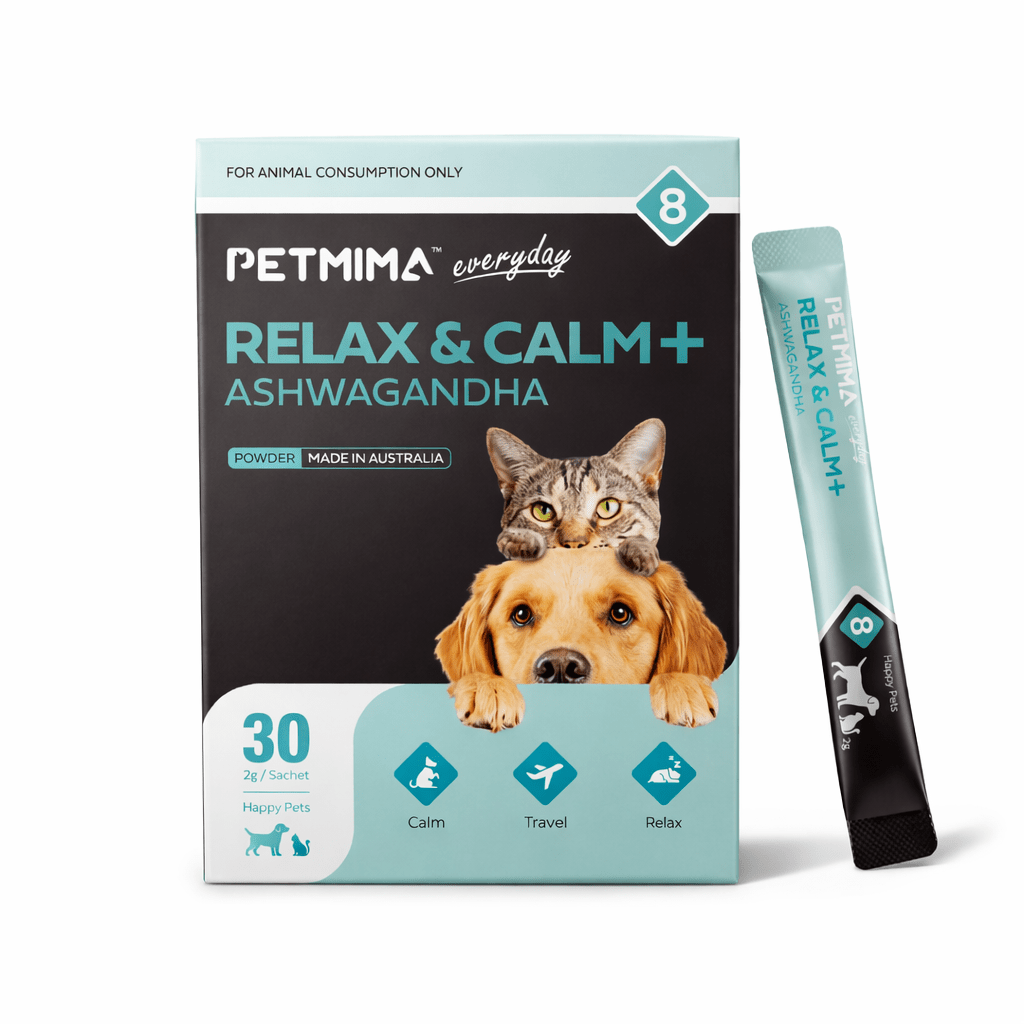
Petmima Relax & Calm + Ashwagandha
For owners searching for L-theanine for dogs, Petmima Relax & Calm + Ashwagandha is a practical place to start because it combines L-theanine with other calming-support ingredients in an easy food-topper format.
Calm is not one product.
It is a routine your dog can trust.
References
[1] American Veterinary Medical Association. Behavioral Management of Dogs.
https://www.avma.org/resources-tools/pet-owners/petcare/behavioral-management-dogs
[2] World Small Animal Veterinary Association. Global Nutrition Guidelines.
https://wsava.org/global-guidelines/global-nutrition-guidelines/
[3] American Veterinary Society of Animal Behavior. Position Statements.
https://avsab.org/resources/position-statements/

Leave a Reply