
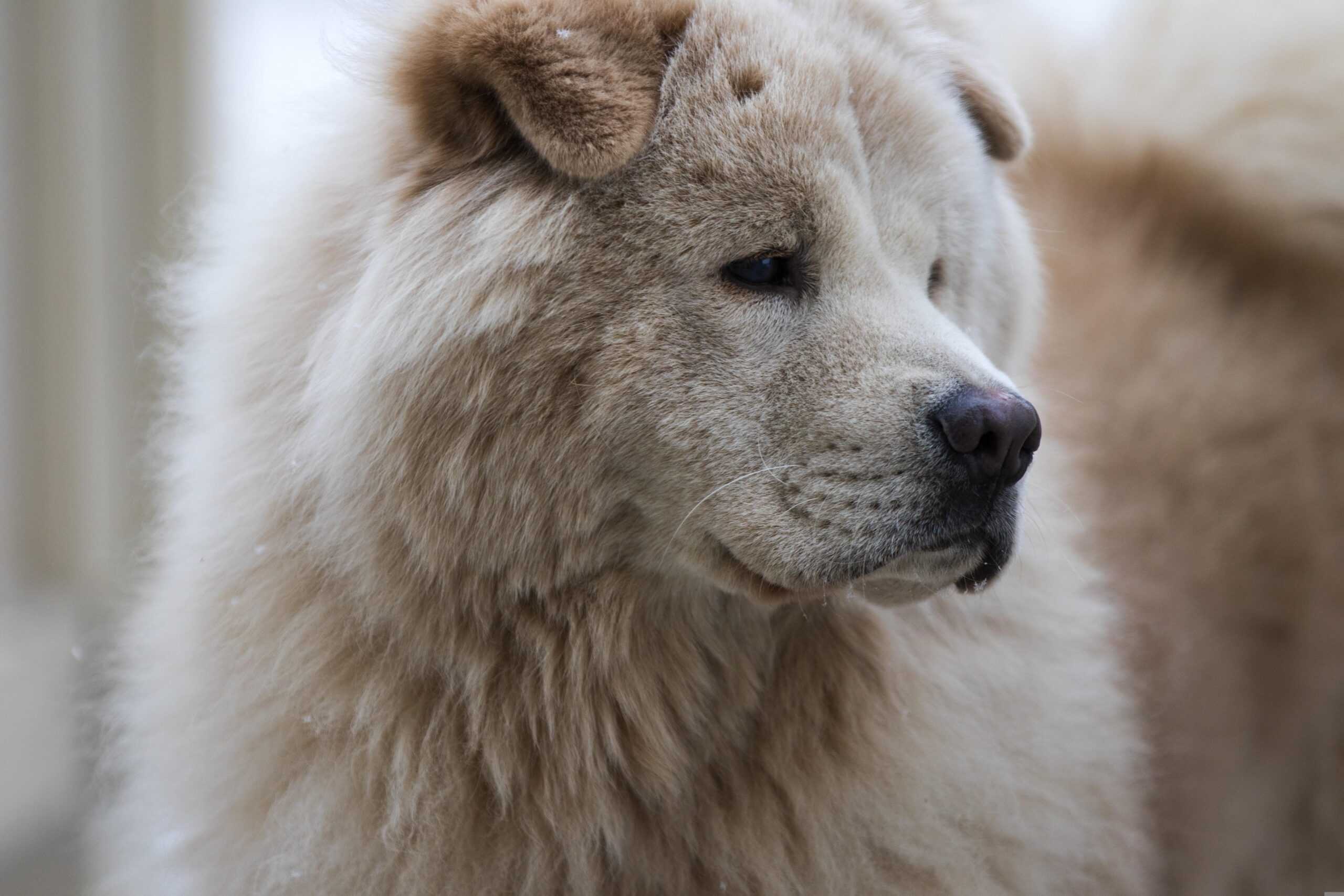
Pet anxiety is often misunderstood. A dog that barks, chews or refuses to settle may be labelled naughty. A cat that hides, over-grooms or urinates outside the litter box may be described as difficult. In reality, these behaviours can be signs that the animal feels unsafe, overwhelmed or unable to cope.
Anxiety is not simply a pet having a bad day. It is an emotional state in which the animal anticipates a threat, even when the danger is not immediate or obvious to us. The body’s stress response remains active, affecting behaviour, sleep, appetite, digestion and the ability to relax.
Dogs and cats can both experience anxiety, but they often communicate it differently. Understanding those differences is the first step towards choosing the right support.
For pets needing gentle daily calming support, Petmima Relax + Calm + Ashwagandha combines several complementary nutrients and botanical extracts in one easy routine for dogs and cats.
Fear, Stress and Anxiety Are Not Exactly the Same
These terms are often used interchangeably, but they describe slightly different responses.
- Fear is a response to an immediate threat, such as a sudden loud noise.
- Stress is the body’s physical and emotional response to pressure or change.
- Anxiety is the anticipation that something unpleasant may happen.
A short stress response is normal and useful. It helps an animal react to danger. The problem begins when the response is intense, happens too often or continues after the trigger is gone.
For example, a dog may start panting before its owner leaves because it has learned that shoes and keys predict being alone. A cat may remain hidden for hours after visitors leave because its nervous system has not returned to a relaxed baseline.
Veterinary literature recognises separation anxiety and noise aversion as significant canine behaviour problems that may require a combination of environmental management, behaviour modification and, in some cases, medication.[1]
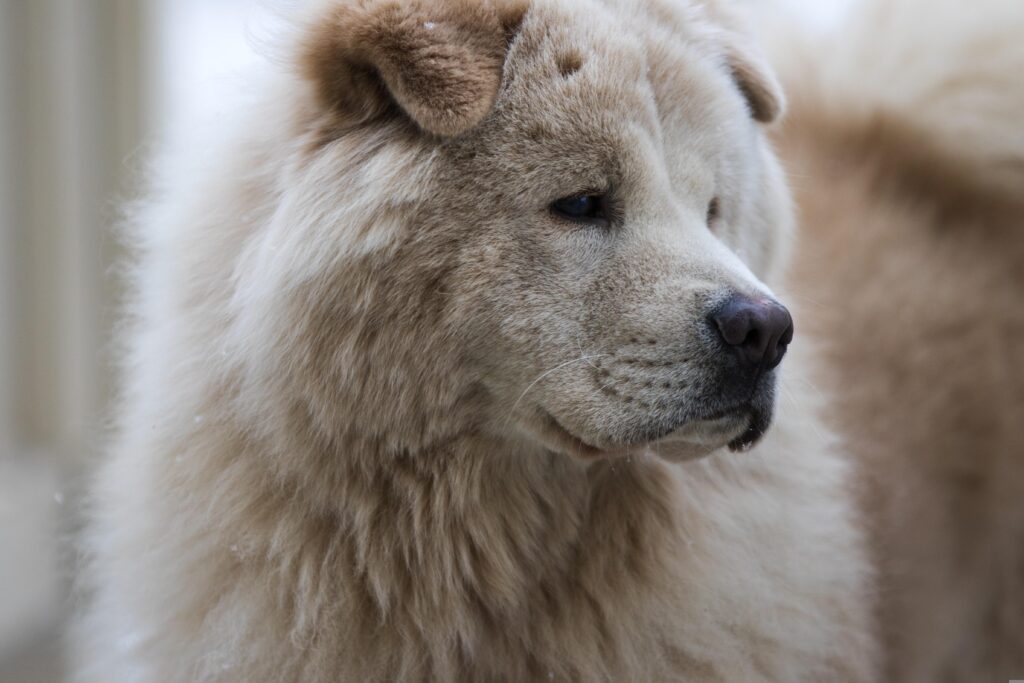
A dog displaying signs of stress, anxiety, or sadness.
What Does Anxiety Look Like in Dogs?
Dogs often communicate distress through visible activity. Some become louder or more destructive, while others freeze or withdraw.
Common signs include:
- Panting when the weather is not hot
- Pacing or difficulty settling
- Shaking or trembling
- Excessive barking, whining or howling
- Following an owner constantly
- Hiding or trying to escape
- Chewing furniture, doors or personal items
- Scratching at exits when left alone
- Drooling
- Refusing food during stressful situations
- Toileting indoors
- Excessive licking or chewing of the body
- Reactivity, growling or snapping
- Restlessness at night
Common Dog Anxiety Triggers
Dogs may become anxious in response to:
- Separation or isolation
- Thunderstorms and fireworks
- Veterinary visits or grooming
- Car travel
- Unfamiliar people or animals
- Moving home
- A new baby or pet
- Changes in work and walking schedules
- Past frightening experiences
- Pain, illness or age-related cognitive change
Separation-related behaviour can also interact with physical disease, which is one reason sudden or worsening symptoms deserve veterinary assessment.[2]
For a deeper dog-specific guide, read Dog Anxiety & Calm: Why Dogs Get Anxious and How to Help.
What Does Anxiety Look Like in Cats?
Cats often show anxiety more quietly. Hiding and avoidance can be missed because the cat is not disrupting the household.
Common feline signs include:
- Hiding more than usual
- Avoiding people or other pets
- Over-grooming or pulling out fur
- Becoming unusually clingy
- Irritability or aggression
- Increased night-time vocalisation
- Reduced play and exploration
- Sudden changes in appetite
- Spraying or urinating outside the litter box
- Repeated visits to the litter tray
- Restlessness and exaggerated startle responses
- Changes in sleeping locations
- Guarding food, water, resting areas or litter trays
Common Cat Anxiety Triggers
Cats depend strongly on territory, predictability and control. Anxiety may follow:
- Moving furniture or renovating
- A new home, person or animal
- Competition in a multi-cat household
- Too few litter trays or feeding stations
- Loud noises and unfamiliar smells
- Travel or boarding
- Changes in feeding times
- A lack of hiding places or vertical space
- Pain or urinary disease
Current feline behaviour research emphasises careful recognition of fear, anxiety and stress, together with species-appropriate environmental and handling strategies.[3]
Sudden litter-box changes, particularly in male cats, should never be assumed to be anxiety. Urinary obstruction can be an emergency.
Read Cat Anxiety: How to Spot It, What Triggers It and How to Support Calm Behaviour for a more detailed feline plan.
Why Anxiety Is More Than Behaviour
When an animal repeatedly expects danger, the effects can spread beyond the original trigger. Chronic stress may influence:
- Sleep quality
- Appetite
- Digestion and stool quality
- Skin and grooming behaviour
- Social confidence
- Learning and concentration
- Recovery after a frightening event
- The relationship between the pet and household
This is why punishment is rarely helpful. Punishing the behaviour may confirm that the situation is unsafe, increasing the very emotion driving it.
The goal is not to suppress communication. It is to help the pet feel safer and recover more easily.
Do Pet Calming Supplements Really Work?
The honest answer is: they can help, but they are not all the same and they are not a complete treatment by themselves.
Results depend on:
- The cause and severity of the anxiety
- The ingredients and amounts used
- Whether the product is given consistently
- The animal’s individual response
- Environmental changes and behaviour work
- Whether pain or illness has been addressed
Some calming ingredients have veterinary or preclinical research behind them, but the evidence is not equally strong for every ingredient or every anxiety condition.
For example, an open-label field study evaluated L-theanine in cats showing stress-related emotional signs and reported improvement across several measures.[4] Because it was open-label rather than placebo-controlled, the result is encouraging rather than definitive. This is a good example of how calming-supplement evidence should be interpreted: useful, promising and part of a broader plan, but not a guaranteed cure.
A supplement may make it easier for a pet to settle, cope with triggers and engage with training. It cannot teach a dog to feel safe when alone, resolve conflict between cats or diagnose a medical problem.
Is a Calming Supplement a Daily Essential?
It depends on whether the anxiety is situational or ongoing.
Situational Anxiety
Some pets are relaxed most of the time but struggle with predictable events such as:
- Fireworks
- Thunderstorms
- Travel
- Grooming
- Veterinary appointments
- Visitors
These pets may need a planned short-term routine around the event. Timing matters, and owners should follow the product directions or veterinary advice rather than waiting until the animal is already panicking.
Ongoing Anxiety
Other pets live with repeated or unpredictable triggers:
- Separation-related distress
- General nervousness
- A busy or changing household
- Multi-pet tension
- Frequent noise exposure
- Senior-age confusion
- A long history of fear
For these animals, consistent daily support may be more useful than occasional use. A stable routine avoids repeatedly waiting for anxiety to become obvious before responding.
Daily does not mean lifelong without review. It means using the product consistently for the period in which the pet needs baseline support, while monitoring behaviour and working on the underlying causes.
“My Pet Is Calm Now, So Should I Stop?”
Not automatically.
When anxiety signs improve, there are several possible explanations:
- The original trigger has disappeared.
- Training and environmental changes are working.
- The pet has developed better coping skills.
- The calming routine, including the supplement, is helping.
- Several of these factors are working together.
Stopping everything immediately makes it difficult to know which support was important. It can also allow signs to return before the owner notices the early warning signals.
A calmer pet is not necessarily a pet that never had anxiety. Sometimes calm behaviour is evidence that the management plan is doing its job.
A more sensible approach is to:
- Maintain stability during training or major life changes.
- Track behaviour for several weeks.
- Avoid changing multiple parts of the plan at once.
- Review ongoing need with a veterinarian or qualified behaviour professional.
- If appropriate, trial a planned reduction while keeping the environment and routine consistent.
- Restart or reassess promptly if early signs return.
Calming supplements are not generally the same as prescription anxiety medication, but a pet taking prescribed medication should never have it reduced or stopped without veterinary direction.
What Does Petmima Relax + Calm Provide?
Petmima Relax + Calm + Ashwagandha uses a multi-ingredient formula rather than relying on one calming pathway.
Its listed active ingredients include:
Ashwagandha Extract
Ashwagandha is an adaptogenic botanical traditionally used to support the body’s response to stress. Petmima includes it as part of the formula’s daily emotional-balance focus.
A randomised, double-blind, placebo-controlled study has evaluated ashwagandha root extract in healthy geriatric dogs, reporting changes across several ageing-related measures.[5] That study was not specifically a clinical anxiety trial, so it should not be presented as proof that ashwagandha treats canine anxiety. It does, however, add canine-specific safety and research context to an ingredient more commonly studied in humans.
L-Theanine
L-theanine is an amino acid used in calm-support formulas to promote a relaxed but alert state. This makes it attractive for owners who want support without simply making the pet sleepy.
Petmima has a dedicated guide explaining L-theanine for dogs and calm behaviour.
L-Tryptophan and Vitamin B6
L-tryptophan is an amino acid involved in serotonin production. Vitamin B6 participates in amino-acid metabolism and is included as part of the nutritional pathway supporting normal nervous-system function.
Chamomile Extract
Chamomile has a long history of traditional use for relaxation. In Petmima’s formula, it complements the amino acids and adaptogenic ingredients rather than acting as the entire product.
Mucuna Pruriens and Ginger Root Extracts
These botanical extracts broaden the formula beyond a single calming ingredient. They are included within a combined product designed to support emotional balance and everyday wellbeing.
The advantage of Petmima’s approach is not that one ingredient “switches off” anxiety. It is that the formula combines complementary nutrients and botanicals in one repeatable daily routine.
For more background on the botanical approach, see How Herbs Help Manage Stress and Anxiety in Cats and Dogs.
Why Choose Petmima for Daily Calm Support?
Petmima Relax + Calm is designed around the way anxiety is actually managed: through consistency, multiple forms of support and realistic expectations.
It Supports Calm Without Making “Sedation” the Goal
The purpose of a daily calming supplement should be to help the animal cope and remain able to learn, play and interact, not simply appear quiet.
It Combines Complementary Ingredients
Ashwagandha, L-theanine, L-tryptophan, chamomile, Mucuna pruriens, ginger and vitamin B6 provide broader nutritional support than a single-ingredient product.
It Works Alongside Training and Environmental Change
The product can fit into a plan that includes gradual exposure, enrichment, safe spaces, predictable routines and professional behaviour support.
It Is Suitable for Both Dogs and Cats
Multi-pet households can use one species-appropriate calming range while still following the directions for each animal.
It Is Easy to Make Part of a Routine
Daily support is only useful when owners can provide it consistently. Petmima’s powder format is designed to fit naturally into feeding routines.
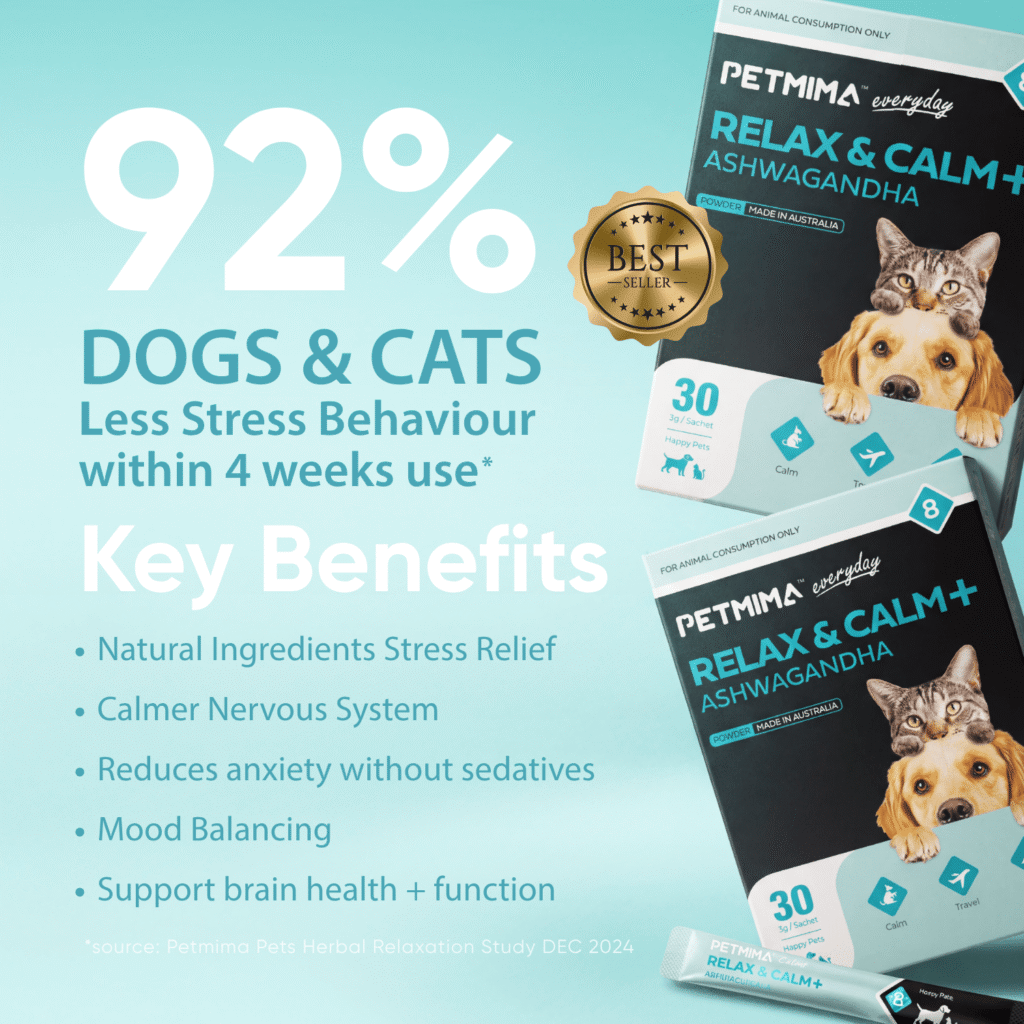
Explore Petmima Relax + Calm + Ashwagandha for everyday or situational calming support.
The Best Results Come From a Complete Calm Plan
A supplement works best when the pet’s daily environment supports the same goal.
For Dogs
- Keep meals, walks and rest times predictable.
- Provide sniffing, chewing and age-appropriate exercise.
- Create a quiet resting place.
- Use gradual, reward-based exposure to triggers.
- Avoid forcing frightened dogs into overwhelming situations.
- Seek help early for separation distress or aggression.
For Cats
- Provide hiding places and vertical territory.
- Separate food, water and litter resources in multi-cat homes.
- Use regular short play sessions.
- Allow the cat to control social interaction.
- Keep scents and household changes gradual where possible.
- Rule out urinary, dental and pain-related conditions.
Pets whose stress is closely linked with digestive upset may also benefit from reviewing Petmima Relax + Digestive, which targets both calm behaviour and digestive balance.
When Supplements Are Not Enough
Arrange veterinary or qualified behavioural help when:
- Anxiety appears suddenly.
- The pet may be in pain.
- A cat has urinary symptoms.
- The animal injures itself or damages exits trying to escape.
- Aggression places people or animals at risk.
- The pet cannot eat, sleep or function normally.
- Behaviour is worsening despite home support.
- A senior pet becomes confused or restless at night.
Severe anxiety may require diagnostic testing, a formal behaviour plan or prescription medication. Using those tools is not a failure. The goal is the animal’s welfare.
Frequently Asked Questions
Can dogs and cats have anxiety even when they seem calm?
Yes. Some pets freeze, hide or reduce activity rather than becoming noisy. Owners should look for changes from the animal’s normal behaviour, not only dramatic symptoms.
How quickly should a calming supplement work?
Response depends on the formula, the animal and the trigger. Situational support and long-term baseline support are different. Follow the product directions and assess patterns over time rather than judging a daily product from one difficult event.
Should Relax + Calm be used every day?
Daily use may suit pets with frequent, chronic or unpredictable stress. Occasional use may suit pets with isolated predictable events. Follow the label and discuss persistent anxiety with a veterinarian.
Will my pet become dependent on a calming supplement?
Nutritional calming supplements are not intended to create intoxication or behavioural dependence. However, signs may return if the support was helping and is removed while the underlying triggers remain.
If my pet improves, does that prove the supplement worked?
Not by itself. Improvement may come from the supplement, training, environmental change, natural adaptation or a combination. That is why changing one part of the plan at a time is helpful.
Can Petmima replace anxiety medication?
No supplement should be presented as a direct replacement for prescribed medication. Petmima can support a broader calm-behaviour plan, while medication decisions belong with the treating veterinarian.
Final Thoughts
Pet anxiety is real, but it does not look the same in every animal. Dogs often show distress through panting, pacing, vocalising, destruction or clinginess. Cats more often hide, over-groom, withdraw, become irritable or change their litter-box habits.
Calming supplements can be valuable when they are well chosen and used as part of a complete plan. For pets exposed to ongoing stress, daily consistency may help maintain a steadier emotional baseline. If symptoms improve, that is a reason to review the plan thoughtfully, not necessarily to stop everything immediately.
Petmima Relax + Calm brings together ashwagandha, L-theanine, L-tryptophan, chamomile and complementary nutrients in one convenient formula for dogs and cats. Its role is not to hide behaviour or replace professional care. It is to support calm, emotional balance and a routine in which the pet is better able to cope.
Build a more consistent calm routine with Petmima Relax + Calm + Ashwagandha, or explore more practical guidance in the Petmima Pet Tips blog.
References
- Sherman BL, Mills DS. Canine anxieties and phobias: an update on separation anxiety and noise aversions. Veterinary Clinics of North America: Small Animal Practice. 2008;38(5):1081-1106. PubMed
- Separation-related Problems and Their Interaction with Physical Disease. 2024. PubMed
- Tools for the Approach of Fear, Anxiety, and Stress in the Domestic Feline: An Update. 2025. PubMed
- Dramard V, Kern L, Hofmans J, Rème CA, Nicolas CS, Chala V. Effect of L-theanine tablets in reducing stress-related emotional signs in cats: an open-label field study. Irish Veterinary Journal. 2018;71:21. PubMed
- Effects of Ashwagandha (Withania somnifera) Root Extract on Aging-Related Changes in Healthy Geriatric Dogs: A Randomized, Double-Blinded Placebo-Controlled Study. 2024. PubMed
Leave a Reply